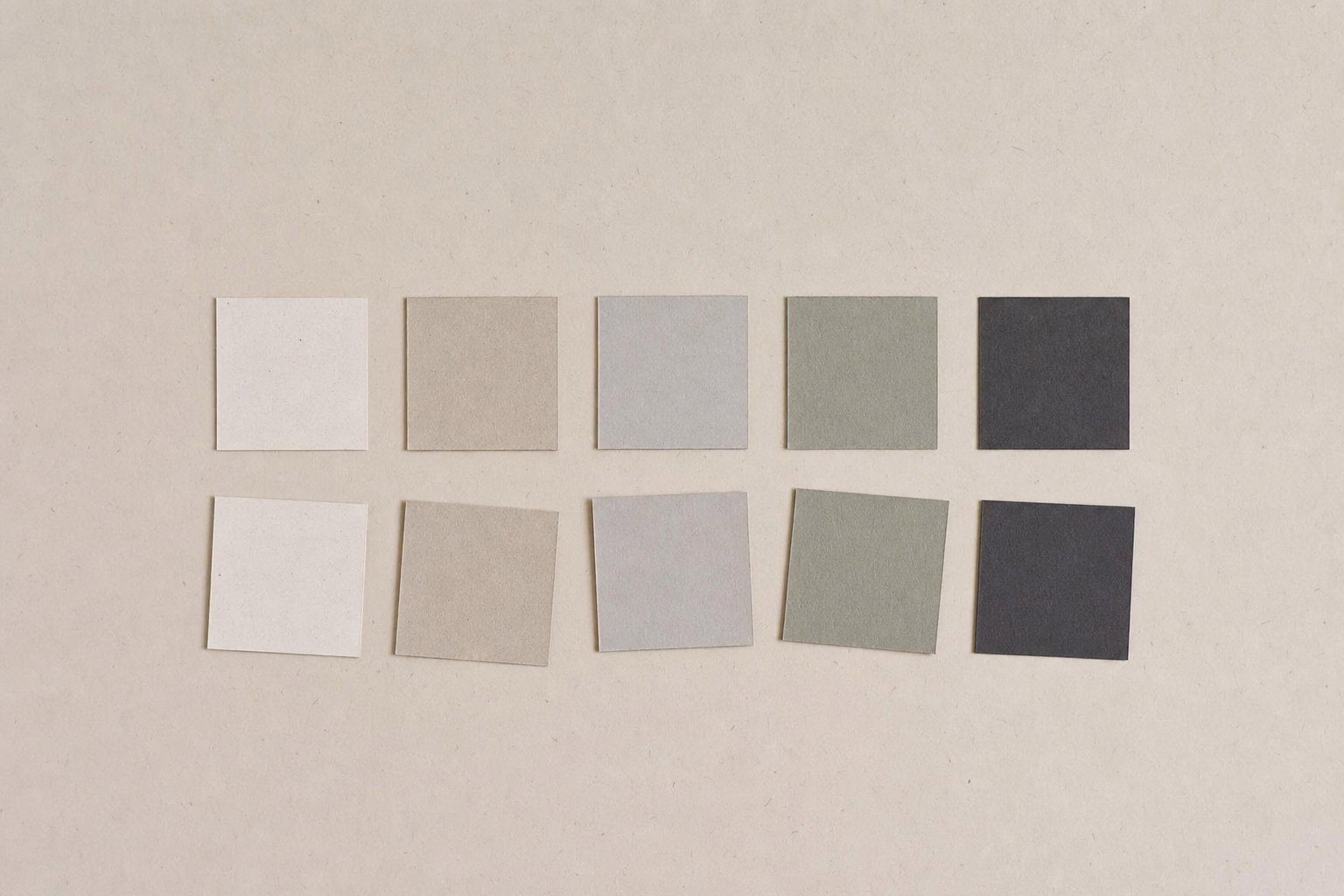
What Is a Color Library in PLM and Why It Matters Across Channels

A merchandiser opens the SS25 linesheet on Monday morning. The Bone colorway shows as off-white on the Shopify PDP, ivory on the B2B portal, natural on the EDI catalog feed to a major department store, and #F5EFE0 in the tech pack the factory is cutting against. Four names, four hex values, one physical garment. The customer-service inbox already has three emails asking why the dress that arrived does not match the website photo. The wholesale account manager is on a call defending a chargeback for color mismatch on a recent shipment. Nobody is wrong on their own screen. The color library is wrong everywhere at once.
What is a color library in PLM for apparel, exactly?
A color library plm apparel teams rely on is the controlled master list of every approved color a brand sells against, with the metadata that makes it executable downstream. That metadata is not optional. It includes the internal color code, the marketing name, the Pantone TCX or TPG reference, the lab dip approval status, the vendor-specific dye code if mills require it, the digital swatch image, and the hex or RGB value used for ecommerce rendering. One record. One source. Everything else, the tech pack, the B2B linesheet, the Shopify variant, the EDI 832 catalog feed, the warehouse pick label, reads from it.
When people say their PLM has a color library, what they usually have is a dropdown. A dropdown is not a library. A library has version history, approval state, channel mapping, and an enforced relationship to every SKU that uses it. A dropdown is a list of strings someone typed in once.
The distinction matters because the dropdown version is what causes the failure mode in the opening scene. The fields exist, but nothing forces them to stay in sync with the systems that consume them.
Why does color drift happen across channels in the first place?
From the fit calls I run with prospects each week, the pattern is almost always the same. The brand started with a tech-pack template in Illustrator or a shared drive. Colors lived in the file. When ecommerce launched, someone retyped the color name into Shopify and picked a hex that looked close on their monitor. When the brand signed its first major wholesale account, the EDI provider asked for a color code, and someone mapped it on a spreadsheet that lives on one person’s laptop. When a new factory came on, the production manager emailed the lab dip approvals as PDFs.
Nothing was lazy about any of these decisions. They were rational at the time. But each one created a new copy of the color record, and each copy started drifting the moment it was made. There is no central object that all four systems point at. There are four parallel objects that loosely agree at the start and disagree more every season.
This is exactly the BP1 failure in the 6 Breakpoints framework: product data starts fragmenting. Color is usually the first attribute to go because it touches the most channels and has the most stakeholders editing it. Size runs fragment second. Fabric content fragments third. By the time the brand notices, the PLM, the ERP, the 3PL WMS, and the storefront are running on different versions of the same product.
What does a working color library actually contain?
The minimum schema, based on what apparel brands at the $10M to $20M breakpoint zone actually need to operate, is roughly this:
- A unique internal color code that never changes once issued, even if the marketing name does
- A marketing or display name, which is allowed to vary by season or collection
- A Pantone reference, ideally with both TCX (cotton) and TPG (paper) values where the brand uses both
- A lab dip status with version number and approval date
- A vendor-specific dye code per mill, because mills do not all reference Pantone the same way
- A hex or sRGB value tuned for screen display, which is not the same as the Pantone value converted naively
- A swatch image asset, photographed under controlled lighting, used on PDPs and B2B portals
- A channel-mapping table that says how this color renders in each downstream system
The channel-mapping table is the part most brands skip and most regret. It is the field that says: in Shopify this color is called Bone, in the EDI feed to retailer A it maps to code 042, in the EDI feed to retailer B it maps to NATURAL, on the B2B portal it displays as Bone with this specific swatch image. Without that table, every channel team makes its own translation decision, and the translations diverge.
Why does this matter more for brands running wholesale and DTC together?
A pure DTC brand can get away with a sloppy color library for a long time. There is one storefront. One photographer. One copywriter. If Bone is slightly off, the brand controls the narrative and the returns flow.
A pure wholesale brand suffers earlier, because retailers enforce color compliance through their vendor manuals and chargebacks, but the surface area is narrower. There are a finite number of retailer feeds.
The brands that suffer worst are the ones doing both at once, which is the entire Uphance ICP. A $15M brand running wholesale plus DTC plus a 3PL is already losing 6 to 9 hours a week reconciling inventory across Shopify, the 3PL, and wholesale. Color drift compounds that reconciliation problem. When the Shopify variant called Bone and the wholesale SKU called Natural are physically the same garment but listed as different items in different systems, the reconciliation is not an inventory query. It is detective work.
What I see from prospects who have already shortlisted three vendors is that they almost never raise color as the presenting problem on the first call. They raise inventory accuracy, oversells, or chargebacks. Color comes up in the second or third conversation, when we walk back from the symptom to the cause. The 2 to 3 percent oversell rate at peak in the back-of-envelope ICP profile is partly a forecasting problem and partly an allocation problem, but a meaningful slice of it is that nobody is sure whether two SKUs with different color codes are the same unit on the shelf.
What does color drift cost, in workflows you can actually point at?
This is where the abstract problem becomes a line item. The costs sit in five places.
The first is returns. A DTC customer who receives ivory when they ordered bone returns the item, and the return cost includes the inbound shipping, the QC inspection at the 3PL, the restocking labor, and the markdown if the unit cannot be resold as A-grade. Returns should post to inventory in days, not weeks, but a return where the customer-stated reason is color mismatch often gets routed for manual review, which delays the inventory repost and double-counts the unit.
The second is wholesale chargebacks. Major retailers fine for shipment-to-catalog mismatches, including color description mismatches in the ASN versus the PO. If retailer chargebacks exceed 1 percent of wholesale revenue, the integration is the problem, not the warehouse, and the color library is often where that integration is leaking.
The third is sales-sample reorder cost. When the showroom team cannot confirm which colorway is which because the sample tags do not match the linesheet, the brand reorders samples to be safe. Sample costs are small per unit but cumulative across a season.
The fourth is production rework. A factory cutting against a tech pack with an outdated lab dip reference produces a bulk run in a color that does not match the approved standard. Either the brand accepts the variance and absorbs the markdown, or it rejects the shipment and absorbs the delay. Both are expensive.
The fifth is the one FTE quietly doing data plumbing. The merchandising coordinator who spends Monday morning reconciling color codes across the PLM export, the Shopify CSV, and the B2B portal upload is not a data-entry hire. They were hired to merchandise. The time they spend on plumbing is the most expensive time in the building because it is the time the brand cannot replace by hiring more juniors.
When does a spreadsheet color library stop working?
The honest answer is around the second wholesale account and the third sales channel, whichever comes first. Before that, a well-maintained Google Sheet with color codes, Pantone references, and hex values can hold the line. The owner of the sheet knows every entry, manually updates the Shopify variants, and emails the factory the latest version.
Three things break that model. The first is when the brand signs an EDI-enabled wholesale account that requires a structured catalog feed. The catalog feed wants a specific color code format, and the spreadsheet owner now has a translation job that runs every time a style is added. The second is when the brand adds a B2B portal. The portal wants swatch images and consistent color names, and the linesheet PDF is no longer the canonical source. The third is when the brand adds a 3PL. The 3PL wants the color attribute on the inbound ASN to match the SKU master, and any mismatch creates a putaway exception.
At that point, the color library has to live in the system that owns the product master, which for an apparel brand is PLM or, in the unified architecture Uphance runs, the PIM and PLM modules sharing one product object. Wholesale should not run through Shopify’s native flow, and color data should not run through whichever channel happened to be set up first. The product data, color included, lives in the product system and is published outward.
How should the color library connect to every other system?
The rule is simple. The PLM color library is the writer. Every other system is a reader.
Shopify reads the color library and creates or updates variants with the correct internal code, marketing name, hex value, and swatch image. The EDI integration reads the color library and the channel-mapping table to produce the correct retailer-specific color code on the 832 catalog feed and the 856 ASN. The B2B portal reads the color library and renders the marketing name with the approved swatch image. The 3PL or WMS reads the color attribute on the SKU master, which traces back to the same color library record. The tech pack generator reads the color library and embeds the current lab dip reference and Pantone value.
When all five systems read from one writer, color drift becomes an exception, not a default. When any of them can also write, drift is guaranteed within two seasons.
What does this mean for an apparel operations team?
The color library is not a design problem dressed up as an operations problem. It is an operations problem that design tools cannot solve, because design tools were built to render color on one surface, not to govern it across eight systems.
An operations team taking this seriously needs to do two things at once. The first is to audit where color records currently live, count the copies, and identify which system is closest to being the writer. The second is to enforce that every new style added from the next season onward goes through the PLM color library first, with no exceptions for rush items. Rush items are exactly how drift starts.
The brands that get this right do not talk about color as a marketing topic. They talk about it as a data-integrity topic with a marketing surface. The marketing team still owns the names and the swatch photography. The operations team owns the codes, the mappings, and the channel publishing. Those are different jobs, and a working color library is what lets them coexist without stepping on each other every Monday morning.
Where is your operation on the 6 Breakpoints curve?
The assessment scores your apparel operation across all six breakpoints (product data, production, inventory truth, order flow, warehouse execution, reporting) and identifies which one is hurting you most.
Frequently asked questions
Where this fits in the Uphance platform
Shubham writes about evaluating ERP fit, assessing operational complexity, and how apparel brands can tell whether their current systems are helping or holding them back. As a Solutions Consultant at Uphance, he runs discovery conversations and fit assessments for apparel brands moving off patchwork stacks of PLM, PIM, inventory, and B2B tools. His articles cover ERP selection, vendor RFPs, comparison frameworks, and the operational signals that tell a brand it has outgrown spreadsheets and point solutions. He focuses on how mid-market apparel teams evaluate connected platforms against the cost of staying with what they have.
Venkat is the Founder and CEO of Uphance and the author of the 6 Breakpoints of Apparel Operations framework. He writes about operational clarity for apparel brands as complexity grows across channels, warehouses, partners, and teams. His work focuses on why disconnected operations, not growth itself, create the chaos most mid-market brands feel between $5M and $100M in revenue, and on the operating-model patterns that decide whether scaling a brand strengthens execution or fractures it. He argues that the status quo is the real competitor in apparel software, and that the right move is fewer systems with deeper connection, not more dashboards.