What Is a Purchase Order? An Apparel Operator's Guide

A purchase order, in the most basic sense, is a buyer's written commitment to a seller for a defined set of goods at agreed terms. In apparel operations, that definition is technically correct and practically incomplete. A PO to a cut-and-sew factory in Vietnam is not the same instrument as a PO for office supplies. It carries size and color ratios, a tech pack reference, a bill of materials, an MOQ floor, a lead time measured in months rather than days, and a settlement structure that often includes deposits, letters of credit, and split shipments. The pattern I notice repeatedly when I am in customer calls is that brands carry over the generic PO model from their old system and then absorb the variance manually for two seasons before realizing the model itself is the problem.
Picture a real receipt mismatch. A wholesale brand cuts a production PO for 1,200 units across two colors and five sizes, ships in two waves, expects the first wave at 800 units, and the factory ships 760 short of one color in the small size. The container lands on a Friday. The 3PL receives it but the receipt does not post into the system until Tuesday. By Tuesday, the buyer has already pre-sold against an ATS number that was wrong by 40 units. Customer service starts canceling DTC orders on Wednesday. The buyer learns about the shortage the same day she places the next-season commitment. That is not an edge case. That is the standard operating cost of running production POs in a system that was not built for apparel.
What is the purpose of purchase orders?
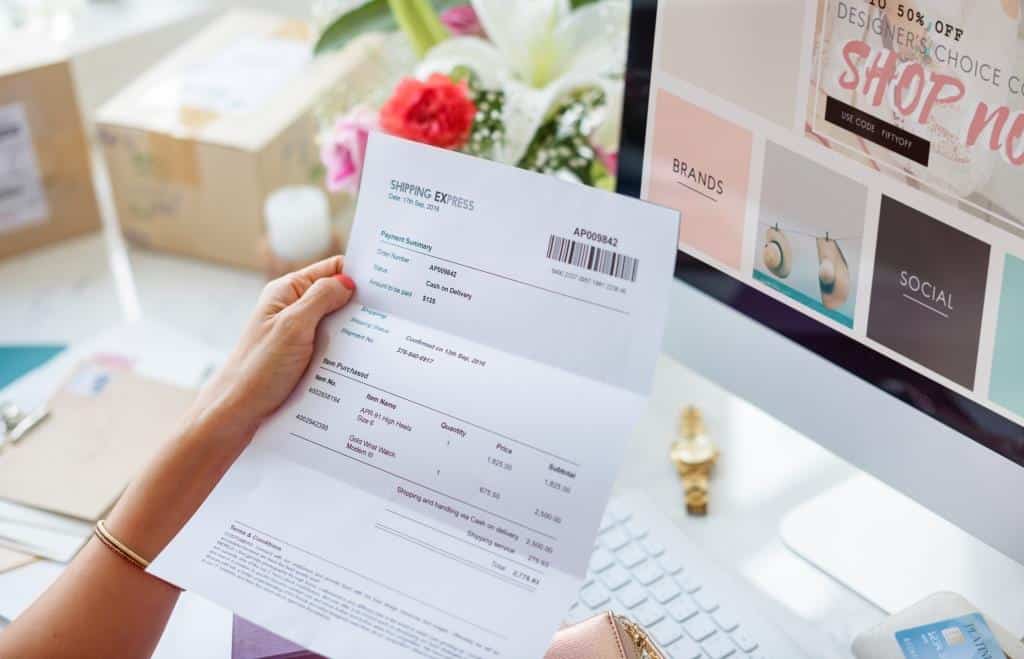
A purchase order does four jobs at once in apparel operations. First, it is a commitment, both legal and financial, to a factory or supplier. Second, it is a forward-looking inventory record that feeds open-to-buy and ATS before the goods physically exist. Third, it is the anchor for cost accounting, because landed cost rolls up against the PO line, not the invoice. Fourth, it is the audit trail for everything that happens between the buyer's commit and the warehouse receipt: revisions, partial shipments, substitutions, cancellations, and chargebacks.
Commitment against future inventory
The moment a production PO is issued, the brand has committed cash and capacity. Most factories take 30 percent on PO acceptance and the balance against shipping documents, sometimes via letter of credit. That deposit is not refundable in any meaningful sense once fabric is cut. Treating the PO as a casual line item rather than a forward commitment is one of the more expensive mistakes I see, especially when buyers and finance run on different systems and only reconcile at month-end.
Forward-looking inventory record
Open-to-buy depends on knowing what is committed, what is on the water, and what has landed. The PO is the primary signal for the first two. If the PO carries a confirmed ship date and the system rolls that into projected ATS, the buyer can plan the next commitment with confidence. If the system only counts PO inventory at receipt, the buyer is flying blind for the 4 to 6 months between commit and arrival.
Cost anchor
Landed cost in apparel is not just unit cost from the factory. It is unit cost plus fabric (often invoiced separately by the mill), trims, freight, duty, and sometimes inspection. All of that has to roll up against the PO line for margin calculation to be defensible. Brands that run POs in QuickBooks at their peril find this out at the first real costing audit: finance closes the loop on the invoice, and production drifts because the BOM linkage was never there.
Audit trail
Production POs get revised. Quantities change. Ship dates slip. Colors get substituted. The PO is the document that holds all of those revisions, and the chain of revisions is what defends a chargeback or a credit note dispute later. If the PO history lives in email threads, the audit trail does not exist.
What is a purchase order number and why does it matter for apparel?
A PO number is the unique identifier that ties together the commit, the receipt, the invoice, the inventory posting, and the cost rollup. In apparel, a single PO number can reasonably touch six or seven different documents over the life of a production cycle: the original PO, one or more PO revisions, the proforma invoice, the shipping invoice, the bill of lading, the goods-receipt note, and the final landed-cost reconciliation. If those documents do not all carry the same PO number and that number is not a foreign key in the inventory and finance systems, the audit trail breaks.
For brands running across multiple entities, the PO number also has to encode entity ownership. From the operational debrief I run with new customers in their first 90 days, the multi-entity wholesale operators are the ones who get bitten hardest by sloppy PO numbering. Lufema, for example, runs roughly 16 brands as parallel entities. Their inventory accuracy hangs on receipts posting against the right PO under the right legal entity. A PO number scheme that does not encode entity, season, and brand is one of the upstream causes of the kind of inventory drift that ends up at the CFO's desk three months later.
What components belong on an apparel purchase order?
A production PO at minimum needs:
- A unique PO number with entity, season, and brand encoded
- The style number and tech pack reference
- The full size and color matrix with ratios
- The factory FOB unit cost, currency, and Incoterms
- The MOQ acknowledgement and any over/under-ship tolerance
- Ex-factory date and target landing date
- Payment terms, including deposit percentage and balance trigger
- BOM linkage so fabric and trim consumption rolls up
- Inspection and AQL terms
- Packaging and labeling spec, including hangtags and care labels
- Routing instructions to the warehouse or 3PL
A material PO carries a different shape. It points at fabric yardage or trim quantities, references the supplier's article number, and ties to the production POs that will consume it. If the brand runs the material PO independently from the production PO, the linkage between them has to be explicit, otherwise the consumption math breaks and the next BOM costing is wrong.
What are the different types of purchase orders an apparel brand actually uses?
The four-type taxonomy that generic ERP guides describe (standard, planned, blanket, contract) is technically correct but operationally misleading for apparel. The types that matter on the floor are these.
Production PO
Issued to a cut-and-sew factory for finished goods against a specific tech pack. Carries the size and color matrix, MOQ floor, deposit terms, and ex-factory date. Lead times are typically 8 to 24 weeks: 4 to 6 months for Asia, 2 to 4 months for nearshore production in Mexico, Central America, or Eastern Europe. This is the PO type that drives most of the operational complexity.
Material PO
Issued to a Tier 1 fabric mill, trim supplier, or component vendor. Mills typically run on a 4 to 12 week production window for fabric yardage, depending on construction and finishing. Trim POs (zippers, buttons, labels, hangtags) often run on shorter windows but with their own MOQ structures. Material POs land first and feed production POs.
Sample PO
Issued for development samples, fit samples, salesman samples, or photo samples. Quantities are small, costs per unit are typically 3 to 5 times bulk cost, and the PO often runs outside the standard procurement workflow. Sample POs that are not tracked end up as missing variance in the cost rollup.
Reorder PO
A repeat production PO against an existing tech pack with no design revisions. Lead times can sometimes be compressed if the factory is already cutting the fabric. The risk is treating a reorder as guaranteed lead time when fabric availability has changed at the mill.
Blanket PO with releases
Used for staple programs and basics. The blanket sets pricing and capacity reservation; releases pull against it as DTC and wholesale demand firms up. This works for brands with predictable replenishment programs and breaks down when the demand signal is too volatile for the release schedule.
How does the apparel PO process actually run?
The 10-step procurement flow that generic guides describe (identify need, select vendor, create PO, approve, send, accept, fulfill, receive, invoice, close) is broadly correct. The apparel reality has more loops in it.
Buy plan and OTB allocation
Before any PO exists, the buyer has built a buy plan against an open-to-buy budget. The plan distributes dollars and units across categories, channels, and delivery windows. The PO is the instrument that converts buy plan into commitment.
Costing and BOM build
The factory FOB cost depends on the BOM, which depends on the tech pack. BOM costing is iterative; the first quote often comes back 15 to 25 percent over target, and the buyer negotiates substitutions, trim downgrades, or fabric alternatives until the costing lands. Skipping the BOM build and going straight to PO is how brands end up locked into a margin they cannot recover.
PO issuance and acceptance
Once the PO is issued, the factory acknowledges, often with a counter on quantity (we can do 1,140 against your 1,200 because the fabric runs short) or on date (ex-factory will slip two weeks). The first revision usually happens here.
Material POs upstream
If the brand owns the fabric, the material PO to the mill happens before the production PO can cut. If the factory owns the fabric, the production PO carries the fabric inside it and the lead time is longer.
Production tracking
Between PO acceptance and ex-factory date, the buyer or production manager runs weekly tracking calls with the factory: fabric in-house, cutting started, sewing 50 percent, sewing 100 percent, packing, ready to ship. Slippage at any stage cascades.
Inspection and AQL
Before goods leave the factory, a third-party inspection is typical at AQL 2.5 for major defects. A failed inspection means rework, delay, or partial acceptance. The PO has to model this.
Shipment and document chain
Goods leave the factory under a commercial invoice and bill of lading. If the deal is on letter of credit, the bank releases payment against the document chain. The PO number has to flow through every document for the LC to clear cleanly.
Receipt at warehouse or 3PL
Goods land. The 3PL or in-house warehouse counts the carton, scans against the PO, and posts the receipt. The receipt event is what increments inventory and decrements open PO. If this posting is delayed, ATS is wrong for the duration of the delay.
Invoice match and cost roll-up
The factory invoice, the freight invoice, the duty invoice, and any inspection invoice all match against the PO. Landed cost rolls up. Variance against expected cost gets posted.
Close and audit
Once the receipt, invoice, and cost rollup all line up, the PO closes. Anything that does not reconcile (short shipment unbilled, overshipment, damaged goods credited) carries forward as an open variance.
Where does the PO process break, and what does it cost?
The honest answer for a $15M wholesale-plus-DTC brand is that the PO process leaks roughly 6 to 9 hours per week of reconciliation work, and most of that leak originates at the PO-to-receipt boundary. Receipts post late. Receipts post against the wrong line. Partial shipments do not match the PO header. Substitutions made at the factory never get reflected back into the PO. Each of those creates a variance that someone, usually the inventory analyst or the operations lead, has to chase.
The downstream effects compound. Late receipts feed wrong ATS, which feeds oversells (typically 2 to 3 percent on peak drops for brands operating with this gap), which feeds customer service refunds and replacements. Wrong PO costing feeds wrong margin reports, which feeds wrong buy decisions in the next season. One FTE in a $15M brand is often effectively doing data plumbing across these gaps without anyone explicitly funding the role.
This is the operational fingerprint of Breakpoint 2 in the 6 Breakpoints framework: production and supply execution drift from the plan. Tech packs, BOMs, production POs, and POs all live in different tools; what gets made, received, and costed diverges from what was planned. BP2 then breaks BP3 (inventory truth), which corrupts BP4 (order flow) and BP5 (warehouse execution), and finally BP6 (reporting) becomes the place where the symptoms get argued about.
Where is production drifting from the plan in your operation?
Late receipts, partial shipments, cost overruns, and PO-to-inventory lag are signals of a deeper operational fracture. The 6 Breakpoints Assessment scores you across the six places apparel operations typically break and identifies which one is hurting you most.
What practices actually hold up at scale?
The teams that run clean PO operations in apparel share a small number of habits.
Treat the receipt timestamp as an SLA
If the receipt posts more than 24 hours after the goods land, the open-to-buy is stale and the buyer is committing the next buy on bad data. The receipt does not have to be perfect on day one. It has to be there. Variance can be reconciled the following day.
Encode entity, season, and brand in the PO number
Especially for multi-entity wholesale operators. PO numbers that look like UPH-FW26-LF-001140 carry more useful information than 001140 ever can. The receipts post against the right ledger. The reports do not require manual classification.
Build sample-to-bulk variance into the PO model
Assume a 2 to 5 percent yield shortfall on quantity and the occasional shade or trim substitution. The PO line should carry an over/under tolerance that the system honors at receipt time. If the factory ships 1,140 against 1,200, the system should not reject the receipt; it should post it as a partial against tolerance.
Run material POs and production POs as linked instruments
Not as parallel ledgers. The fabric consumption from the production PO has to draw against the material PO, otherwise the BOM costing is fiction.
Reconcile cancellations against deposit exposure
A cancelled $80,000 PO is rarely a $0 event. Build the 30 to 50 percent deposit cost and the fabric exposure into the cancellation flow so finance and production agree on the actual cost.
Close the PO when the cost rollup matches, not when the receipt posts
Closing on receipt looks neat in the dashboard and leaves the freight and duty variance hanging. Close on cost rollup, even if it takes another 7 to 14 days, and the margin report tells the truth.
What this means for an apparel operations team
Across the customers we are onboarding right now, the teams that have stopped fighting their PO process are the ones who treated production POs as commitments against future inventory rather than as transactional line items. They linked material POs to production POs. They built tolerance into the receipt logic. They closed POs on cost rollup, not on receipt. They encoded entity and season into the PO number. None of those moves are dramatic in isolation. Together they cut roughly two-thirds of the weekly reconciliation work and pulled the inventory accuracy number into the high 90s.
The brands that have not made these moves are not lazy. They are running a generic PO model on top of an apparel business and absorbing the variance manually. That works for one season. It compounds painfully by the third. The PO is not a ceremonial document. It is the most operationally consequential record an apparel brand creates in a season, and treating it that way upstream is what makes everything downstream defensible.
Frequently asked questions
Where this fits in the Uphance platform
Ruchit writes about product strategy for apparel operations, covering how mid-market fashion brands use connected workflows to manage product development, inventory, orders, warehouse execution, and reporting. As Head of Product at Uphance, he shapes the roadmap that ties PLM, PIM, BOM management, allocation, fulfillment, and warehouse operations into one system. His articles dig into apparel-specific operational mechanics: tech packs, spec sheets, putaway, pick-pack, landed cost, and the data plumbing that makes inventory truth possible across multiple channels and locations. He focuses on the workflow-level questions that separate generic ERPs from systems built for how apparel brands actually run.
Saurabh writes about integrations, data consistency, and how apparel brands connect the commerce, logistics, finance, and operational systems their business depends on. As Engineering Manager for Integrations at Uphance, he leads the team that builds and operates the EDI, API, and connector layer between apparel ERPs and the rest of the stack: Shopify, QuickBooks, Xero, Amazon, 3PL platforms, and retailer trading partners. His articles cover EDI transaction sets (850, 856, 810, 940, 945), integration architecture, sync reliability, retailer compliance, and the failure modes that surface when connected systems drift apart between trading partners.