One connected system for product development, product data, production, inventory, orders, warehouse execution, payments, and reporting. Pick the operating model that matches how your business runs today, then see the full platform behind it.
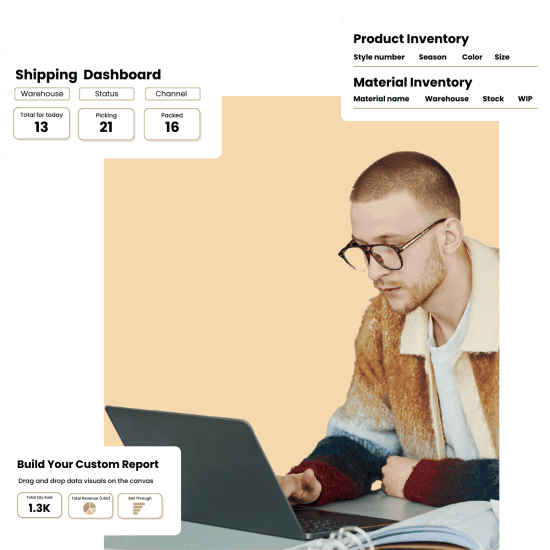




Growth does not usually break apparel operations in one place. It breaks across the handoffs between teams, channels, warehouses, partners, and systems.
What starts as a pricing issue becomes an inventory issue. A fulfillment issue turns out to be a product, production, or order-flow issue. A reporting issue is often really an operations-alignment issue. Uphance structures Solutions around the operating models that create the most drag as complexity grows, each helps a buyer self-identify, but the story stays the same across all of them: one connected operational system.
The challenge is rarely one workflow. It is the drag that shows up when channels expand, production gets more complex, warehouses multiply, and teams work across too many systems.
Run wholesale pricing, customer workflows, B2B ordering, payment visibility, and operational follow-through in one connected system. Built-in B2B capabilities and payments support let teams give customers a smoother experience while staying internally aligned.
As DTC demand grows, small disconnects between product data, production readiness, inventory, orders, and warehouse execution become expensive. Keep Shopify and DTC operations connected to the broader operating system so teams launch, sell, and fulfill with fewer surprises.
Marketplace expansion can drive revenue and create operational drag at the same time. Manage marketplace orders, channel complexity, and inventory coordination from the same connected platform used for core operations, instead of treating marketplaces as an exception.
Run tech packs, BOMs, factory POs, landed costs, and incoming-stock dates as one operational ledger. When production drifts, every other breakpoint compounds, inventory unreliable, orders cannot commit, warehouse execution stutters. The upstream operating model whose accuracy decides what every channel can sell.
When brands add warehouse locations and logistics partners, disconnected systems create blind spots fast. Coordinate inventory, transfers, warehouse execution, and 3PL workflows from one connected operational platform built for multi-channel apparel operations.
As brands scale, inventory truth, operational reporting, payment visibility, accounting, and cross-team alignment become harder to trust across different systems. Operations and finance work from the same connected data foundation, with native accounting tied to live operations, fewer reconciliations, and clearer visibility into how the business performs.
Most apparel brands span two or three operating models. The questions below highlight the one or two paths most likely to match your operation today. For a deeper read, take the 6 Breakpoints assessment.
Uphance bring the operational core of the business into one connected system so teams move faster, stay aligned, and scale with stronger control.
Manage product development with more structure, visibility, and control.
Centralize product information so teams stop chasing updates across disconnected systems.
Track and manage inventory across locations and channels with greater confidence.
Handle wholesale and DTC order flow in one connected layer.
Support receiving, putaway, picking, packing, and execution with workflows built for real ops.
Invoicing, AR/AP, and financial reporting on the same data as operations, native or alongside your integration.
Turn operational data into clearer visibility for day-to-day decisions.
Built-in EDI for retailer workflows, including POs, ASNs, invoices, acknowledgements, and GS1-128 labels.
Wholesale and B2BA branded wholesale portal where customers view products, place orders, make payments, and access account information.
Wholesale and B2BKeep collections and payment workflows connected to customer and operational context.
Wholesale and B2B · Ops and FinanceNative accounting tied to live operations, invoicing, AR/AP, landed cost and COGS, with QuickBooks/Xero integration still available.
Ops and FinanceSupport warehouse execution on phones and tablets as part of connected warehouse operations.
Multi-warehouse and 3PLSupport mobile selling and field sales workflows as part of a connected wholesale operation.
Wholesale and B2BUphance is a strong fit for apparel brands dealing with any of these:
Run product, inventory, orders, warehouse execution, and reporting in one system instead of stitching together disconnected tools.
Support the way apparel brands actually operate across products, variants, orders, channels, warehouses, and partners.
Get serious operational capability without the burden of bloated, generic ERP software.
What each operating model covers, how they connect, and what to expect after you reach out.
A tailored demo starts with a short discovery conversation. We learn how your operation runs today, then show Uphance against the workflows, warehouses, systems, and priorities specific to your business.
Book a tailored demo