
Textile extended producer responsibility apparel rules turn what you sell into a reporting obligation. If your product data cannot output fiber composition, weight, and country of origin per SKU, you cannot file.

AIMS360 alternatives usually come up when an apparel brand outgrows legacy AS/400-style workflows but does not want to buy a generic ERP. This guide compares the real options for $5M to $100M brands running wholesale, DTC, and 3PL together.

Fishbowl alternatives apparel brands actually need in 2026 look nothing like generic inventory swaps. This is a diagnostic guide to what breaks when apparel operators try to run wholesale, DTC, and 3PL on a manufacturing-first tool, and what the real replacement architecture looks like.

A working guide to brightpearl alternatives fashion operators actually shortlist in 2026, covering where Brightpearl fits, where it strains under apparel workflows, and how to evaluate replacements against wholesale, DTC, and 3PL complexity.

A practical 30-day plan to move apparel operations off spreadsheets without freezing the business, sequenced by the 6 Breakpoints framework and built for $5M to $100M wholesale plus DTC brands.

Single source of truth apparel operations is not a slogan, it is an architectural choice about where inventory, orders, and product data actually live. This post breaks down when integrated tools stop working and what the switch actually costs.

Most apparel brands cannot tie channel performance to the next buying decision because reporting sits downstream of disconnected systems. Here is what an operations team needs before OTB, reorder, and allocation calls stop being political.

A shipping carrier rate shopping rule apparel operators can actually trust picks the cheapest compliant service per order at pick time, factoring zone, weight, service level, and retailer routing guides. Without it, DTC margin leaks and wholesale chargebacks pile up.

A packing station layout apparel warehouse teams can trust through peak needs more than tables and tape guns. It needs channel-aware flow, printer placement mapped to document type, and a rework lane that does not stall the whole line.

A warehouse receiving SLA apparel brands can actually enforce defines how fast a 3PL must count, put away, and system-confirm inbound POs. Without one, inventory truth breaks at BP5 and oversells follow within days.

An order aging report apparel teams can actually act on is not a list of open orders sorted by date. It is a weekly operational trigger tied to ship windows, credit holds, and allocation decisions that determine whether wholesale revenue lands this month or slips.

A marketplace listing suppression rule apparel operators use is a conditional gate that stops a SKU from publishing to Amazon, Zalando, or Nordstrom when defined thresholds fail. Skip the rule and you sell inventory you cannot ship, then eat the chargeback.

An apparel shrink rate benchmark under 1 percent of cost of goods sold is realistic for brands running wholesale, DTC, and a 3PL, but the number is meaningless without knowing which of the four shrink categories is driving it.

Choosing a cycle count cadence apparel operations teams can actually sustain is a design problem, not a discipline problem. Here is how to set the cadence by SKU velocity, location risk, and channel exposure so inventory truth holds through peak.

How to track work in progress factories across a multi-vendor apparel supply base without weekly status calls, missed ship windows, or a spreadsheet that lies by Thursday. A diagnostic guide for brands running cut-and-sew across three or more partners.

A fabric commitment apparel sourcing decision locks yardage or greige with a mill before the full order is placed. Here is when to make one, what it costs, and how to keep it from breaking your production plan.

A cut ticket apparel ERP workflow replaces the spreadsheet that most mid-market brands still email to their factory. This post explains what a cut ticket is, why it belongs in production software, and the specific costs of running it in Excel.

A wholesale allocation policy apparel teams can actually defend is a written set of rules that decides which order gets which units when demand exceeds available inventory. Without one, the loudest account wins and your largest accounts quietly lose trust.

A pre-production sample review is the gate where fit, construction, and trims are signed off before bulk cut. When the pre-production sample review lives in PLM instead of email, BP2 drift stops compounding into late deliveries and reissued POs.

Learn how to compare factory quotes apparel teams actually receive without losing the comparison to spreadsheet drift, unit conversion errors, and missing landed-cost lines. A diagnostic for production and sourcing leads.

Inaccurate inventory numbers apparel teams rely on rarely fail loudly. They drift, then they oversell, then they cost a planner six hours a week. Here are the five signs the number on the screen is not the number in the bin.

An apparel erp discovery conversation should happen before the demo, not after, because the demo answers questions the buyer has not yet learned to ask. Here is what a real discovery sequence looks like and why skipping it costs money.

An apparel erp evaluation data room is the single source of truth a brand assembles before vendor demos so every shortlisted system gets scored on the same data, the same workflows, and the same edge cases. Here is the checklist.
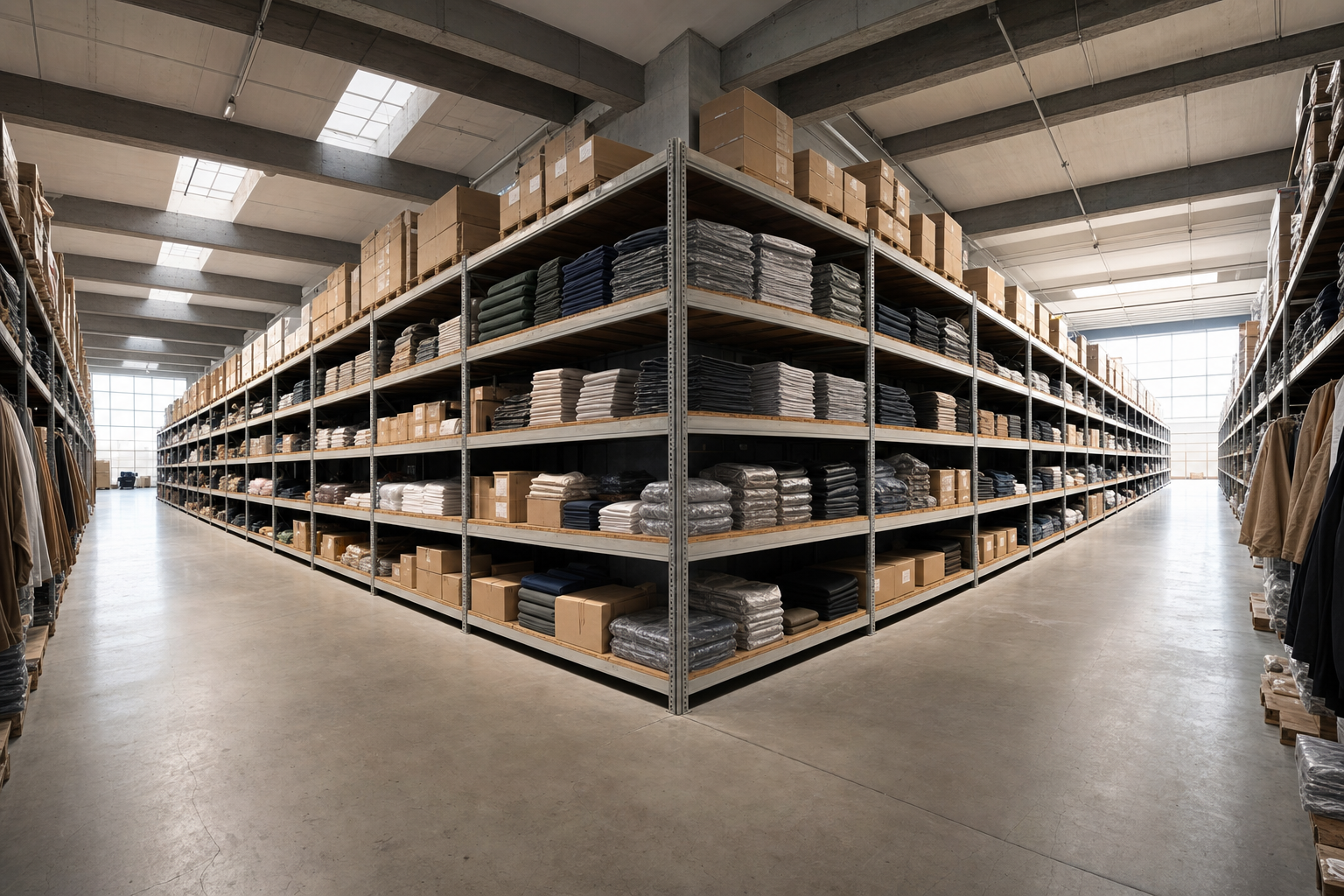
The cost of second warehouse apparel operations is rarely the lease. It is the inventory split, the allocation logic, and the reporting reconciliation that compound quietly until your ATS stops matching reality.

Reading the apparel ERP buying committee is the difference between a clean go-live and a 14-month stall. Here is how to map the five roles, what each one actually wants, and where the deal really gets killed.

The cost of running apparel operations on spreadsheets is not the software bill. For a $15M wholesale plus DTC brand, the real number sits between $180,000 and $300,000 per year once you price out reconciliation labor, oversell exposure, and the decisions leadership cannot make from stale data.

3PL vs in-house warehouse apparel decisions usually get made on cost per pick, which is the wrong primary lens. The right lens is channel mix, drop cadence, and how much control you need over the exception path.

The signs apparel brand needs integrated payments are rarely about checkout. They show up in reconciliation hours, chargeback aging, and the gap between when a wholesale invoice clears and when inventory gets released.

AI allocation replenishment apparel tools promise to fix size curves and store-level distribution, but most teams confuse forecasting hype with the operational fix they actually need. Here is how to tell signal from noise before you sign.

An ai copilot apparel erp demo looks brilliant in a sandbox and useless in a Tuesday allocation meeting. Here are the questions to ask vendors before the contract, the answers that should worry you, and the workflows where copilots actually save time.

How to reconcile payments shopify wholesale apparel operations face every month end: a sequence for matching Shopify payouts, wholesale invoices, and 3PL charges without losing two days to spreadsheets.

A working guide to the best open to buy software apparel brands actually need in 2026, with the evaluation criteria, the channel-aware math, and the architectural choice between point planning tools and unified operations.

Embedded payments for apparel brands sound like a finance topic, but the real impact lands in operations. Here is what actually changes when payments live inside the same system as orders, inventory, and reporting.

AI agents in apparel operations can compress reconciliation, draft POs, and flag inventory drift, but they cannot replace the data model underneath. Here is what they actually do at a $15M brand running wholesale plus DTC.

The best demand forecasting software apparel brands need in 2026 is not a standalone forecasting tool. It is a forecasting layer that reads channel-aware ATS, wholesale commitments, and 3PL stock truth from the same system.

AI demand forecasting for apparel sounds like a fix for stockouts and markdowns, but most tools overpromise on SKUs that have no history. Here is what actually works at the size level, the style level, and the channel level.

Apparel wholesale payment terms cash flow gaps emerge when net 60 invoices, 3PL fees, and inbound POs collide on the same calendar. Here is how to model, price, and close the gap without renegotiating every retailer.

A color library plm apparel teams can trust is the single source of color truth across tech packs, sales samples, and DTC product pages. When it drifts, every downstream channel pays the cost.

Cin7 is a capable multi-channel inventory platform, but apparel brands hit its limits at PLM, production, prepacks, and wholesale trading terms. Here is an honest shortlist of Cin7 alternatives mapped to apparel operating models, with the conditions where each one is the tightest fit.

A style numbering convention apparel brands can actually trust is the difference between clean reorders and a season of guesswork. Here is how multi-channel operators design one that holds up across PLM, ERP, Shopify, and the 3PL.

A wholesale allocation policy apparel teams can actually defend is a written set of rules that decides who gets units when demand exceeds supply, before the season starts. Without it, allocation becomes a Slack negotiation and inventory truth collapses.

Learn how to track factory performance apparel teams can actually defend in a sourcing review, with the metrics, cadence, and scorecard structure that survive across multiple seasons rather than resetting every drop.

Learn how to compare apparel factory quotes without spreadsheet drift, the costing assumptions buyers miss, and the decision framework that prevents picking the wrong factory on landed cost.

A practical guide to sell through rate apparel calculation, why most brands misread the number, and what it actually tells you about buying, allocation, and inventory truth.

Learning how to detect inventory inaccuracy apparel teams can act on starts with the gap between what the ledger says and what the bin holds. This post shows the symptoms, the math, and the architectural fix.

Available to promise vs available to sell apparel is the difference between a number you can ship and a number you can sell. Most brands conflate them, and the cost shows up in oversells, split shipments, and chargebacks.

An apparel ERP fit assessment is the structured diagnostic that tests whether a platform actually handles your wholesale, DTC, and 3PL workflows before contracts are signed. Done right, it surfaces the breakpoints your current stack is hiding.

An apparel ERP discovery conversation is the structured diagnostic that happens before any demo, mapping how product data, orders, inventory, and reporting actually move today. Skip it and you buy software against the wrong problem.

An apparel status quo cost calculation reveals what spreadsheets and disconnected tools actually cost a $10M to $20M brand each year, measured in oversell, reconciliation hours, and the FTE silently dedicated to data plumbing across Shopify, the 3PL, and wholesale.

The pim vs plm apparel difference comes down to what the data is for: PLM governs how a style gets made, PIM governs how it gets sold. Conflating the two is the most common reason product data fragments at $10M to $20M.

An apparel erp evaluation data room is the curated set of operational artifacts, sample data, and process documentation a buyer assembles before vendor demos. It turns a generic pitch into a fit test against your actual workflows.

What is a grade rule apparel pim question matters because grading lives in tech packs and spreadsheets while your PIM ships the wrong size charts. Here is where grading belongs and why.

The apparel erp buying committee is the group of people who must agree before a brand replaces spreadsheets with a connected system. Reading it correctly is the difference between a six-month evaluation and a stalled one.

A marketplace listing engine apparel teams end up building is the connective tissue between your product data and every channel you sell on. Here is why brands keep reinventing it, and what to do instead.

The 3pl vs in house warehouse apparel decision is not about cost per pick. It is about which channels you run, how often you drop product, and whether your operations team can absorb peak volume without breaking inventory truth.

What is an ASN apparel wholesale teams keep getting wrong: the EDI 856 is not paperwork, it is the document that tells a retailer's DC what is on the truck before it arrives. Late or wrong ASNs trigger chargebacks that quietly eat margin.

Most apparel ERP evaluations collapse into a 200-row spreadsheet of features. The brands that pick well ignore the matrix and ask five operational questions instead. Here is the framework, and the specific trap that costs brands six months and a wrong choice.



The best POS systems for apparel brands in 2026 depend on channel mix, not feature counts. This guide compares Shopify POS, Lightspeed, Square, Clover, and Uphance against the operating-model questions that determine fit when retail runs alongside DTC and wholesale.

A roundup of fashion design software across mood boards, trend forecasting, tech packs, CAD, vector graphics, and pattern-making tools.

A working review of the best 5 pattern making and pattern grading software tools for apparel brands, covering Uphance, Modaris, CLO, TukaTech, and Optitex, with selection criteria tied to tech pack handoff, graded specs, and production readiness.

A comparison of six ecommerce platforms for apparel brands, including Uphance, Shopify, BigCommerce, WooCommerce, Magento, and Squarespace.

Compare the top uniform management systems, including Uphance, Uniform Market, Get Workwear, Smart Red, and The Uniform Solution, with core features.


Warehouse layout design fundamentals for apparel operations, covering receiving, storage, picking, packing zones, aisle planning, and safety.

Make to order vs make to stock for apparel brands rarely resolves to one mode. This 2026 guide breaks down the four operating questions that determine fit, the typical hybrid split most $5M to $100M brands run, and how system architecture decides whether the hybrid holds.


A criteria-led comparison of the seven order management systems apparel brands actually evaluate when wholesale, DTC, multi-entity, accounting, and global operations have to live in one connected workflow.


Compare centralized and decentralized manufacturing across cost, quality control, lead times, flexibility, and risk to pick the right model.

A criteria-led comparison of warehouse management systems for apparel brands running wholesale + DTC + 3PL. Covers when basic WMS breaks, four operating-model questions that determine fit, and how Uphance, NetSuite, Cin7, Extensiv, Linnworks, Skubana, and 3PL Central compare.

Best ERP for Shopify-led apparel brands in 2026: a criteria-led comparison covering when Shopify-native is enough, when ERP is required, and how Uphance, NetSuite, Cin7, Brightpearl, Microsoft Dynamics 365, Odoo, and Infor compare for apparel operating models.

A practical breakdown of apparel ERP software, including core features, why fashion brands need it, and how to evaluate the right system.






Compare Uphance, JOOR, NuOrder, and Le New Black on digital showrooms, retailer networks, analytics, and fit for wholesale fashion brands.

Compare the 6 best apparel PLM software options for 2026, with key features, fit for fashion workflows, and how to choose the right system.

A working review of the 6 best apparel tech pack software options in 2025, covering Uphance, Tech Packer, Backbone, Centric, WFX PLM, and Tech Pack Wizard. Compares features, pricing, and when tech pack software beats spreadsheets plus Illustrator for apparel brands.